Introduction
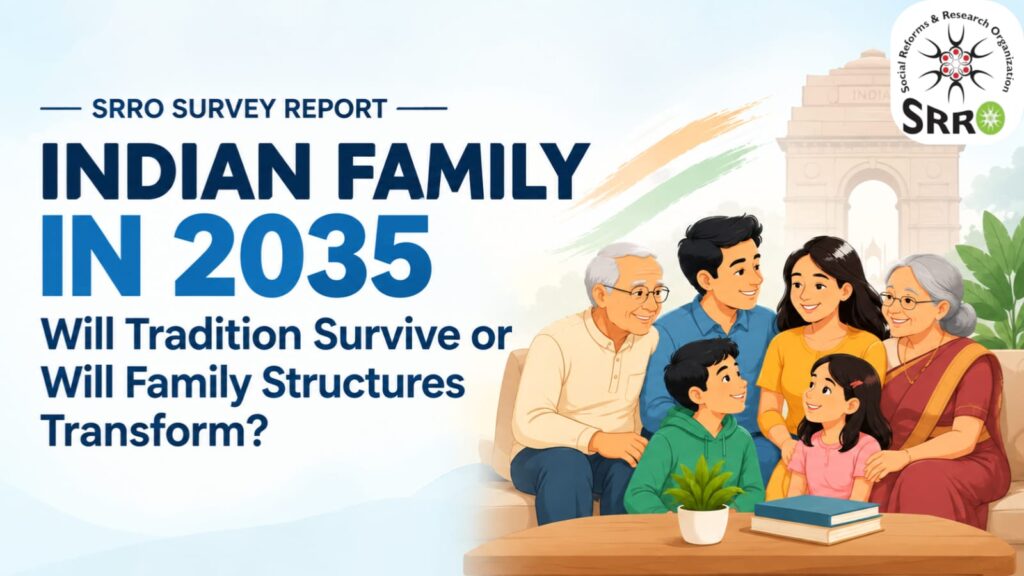
The Indian family has always played an important role in society. However, changing lifestyles, education, career opportunities, urbanisation and increasing independence are gradually influencing family structures and relationships. This survey explores how people think Indian families may change by 2035, particularly in relation to joint families, independent living, marriage, parenthood and parental influence.
Objectives of the Survey
- To understand whether joint families may become less common by 2035.
- To study whether young people may prefer independent living.
- To examine changing attitudes towards marriage and parenthood.
- To understand whether parental influence on marriage decisions may decrease.
- To identify factors that respondents believe could contribute to changing marital relationships and divorce rates.
- To explore whether traditional family values are likely to continue alongside modern lifestyles.
1. Will Joint Families Become Less Common in India by 2035?
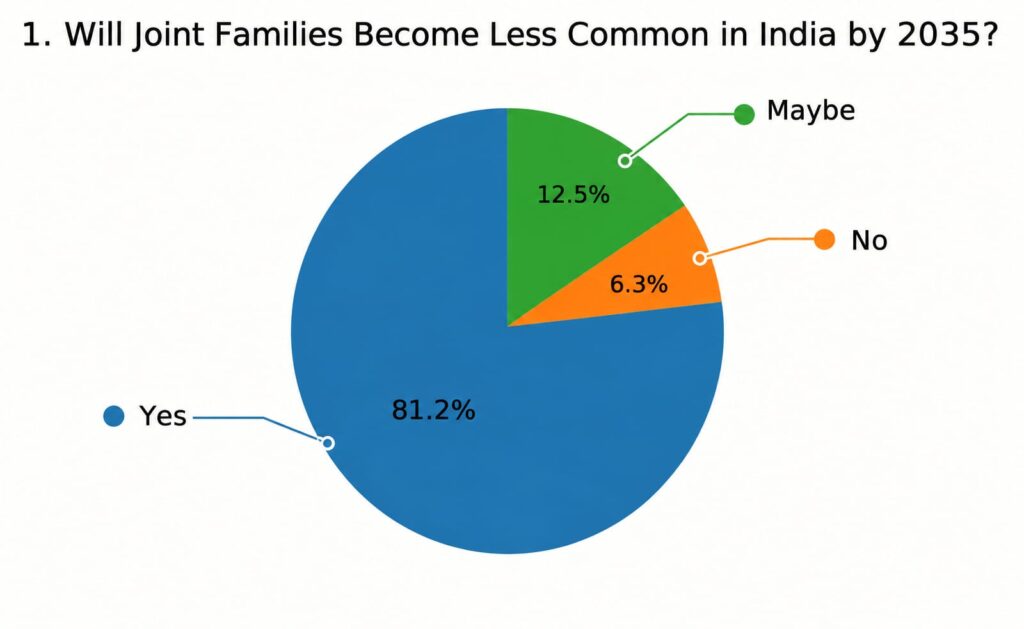
81.3% of respondents said “Yes,” while 6.3% said “No” and 12.5% selected “Maybe.” This shows that most participants expect joint families to become less common by 2035. Employment opportunities, urbanisation, education and migration may encourage people to live separately. However, living separately does not necessarily mean losing emotional connections. Families can continue to stay connected through regular communication, visits and technology.
2. Will Young People Prefer Independent Living?
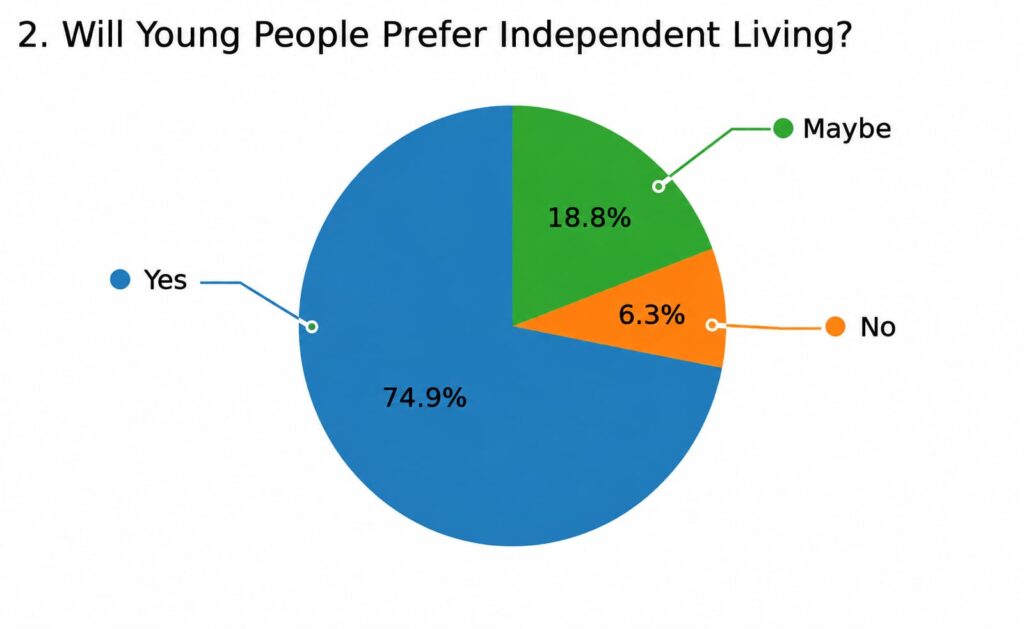
75% of respondents believe that young people may prefer independent living by 2035. Career opportunities, personal freedom, privacy and changing lifestyles could contribute to this trend. Young people may move to different cities for education and employment. Nevertheless, independent living does not necessarily mean separation from parents. People can maintain strong family relationships even while living in different locations.
3. Will More Couples Choose to Remain Child-Free?
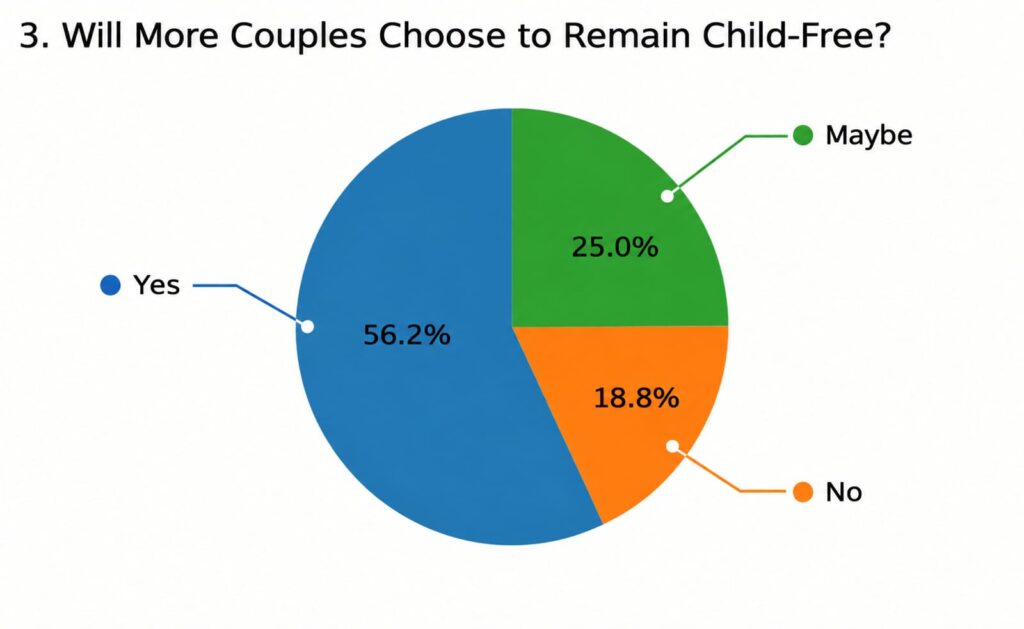
56.3% of respondents believe more couples may consciously choose to remain child-free. Career priorities, financial responsibilities, lifestyle choices and personal preferences may influence decisions about parenthood. However, 25% selected “Maybe,” showing that respondents are not completely certain about how attitudes towards parenthood will develop.
4. Will Marriage Focus More on Personal Happiness and Companionship?
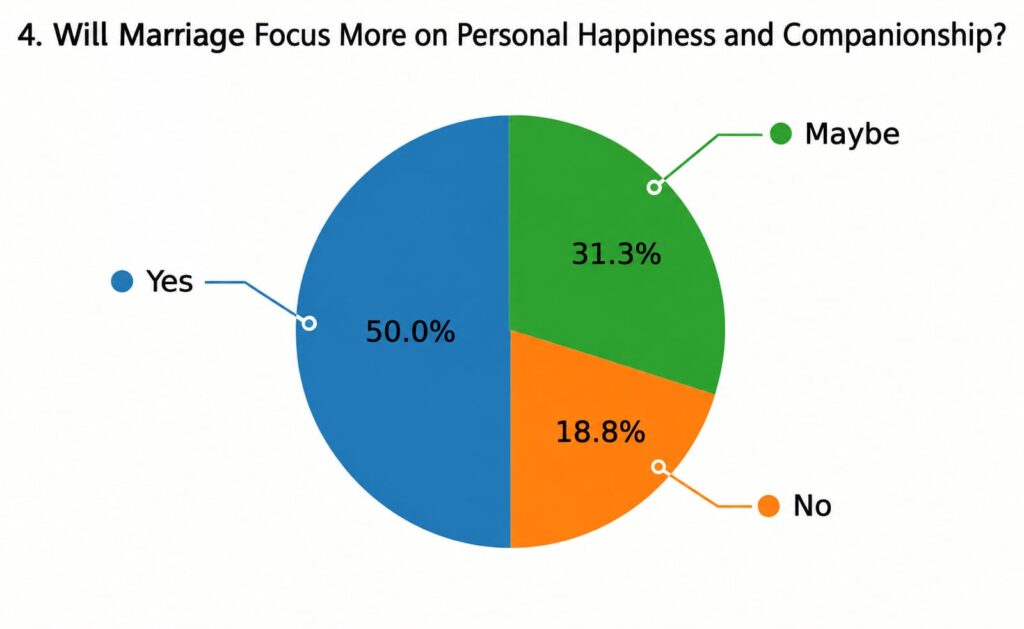
50% of respondents believe marriage may increasingly focus on personal happiness and companionship. This could indicate a growing importance of emotional compatibility, mutual understanding and personal satisfaction in relationships. However, 31.3% chose “Maybe,” suggesting that family and societal expectations may continue to influence marriage decisions.
5. Will Parents Have Less Influence on Their Children’s Marriage Decisions?
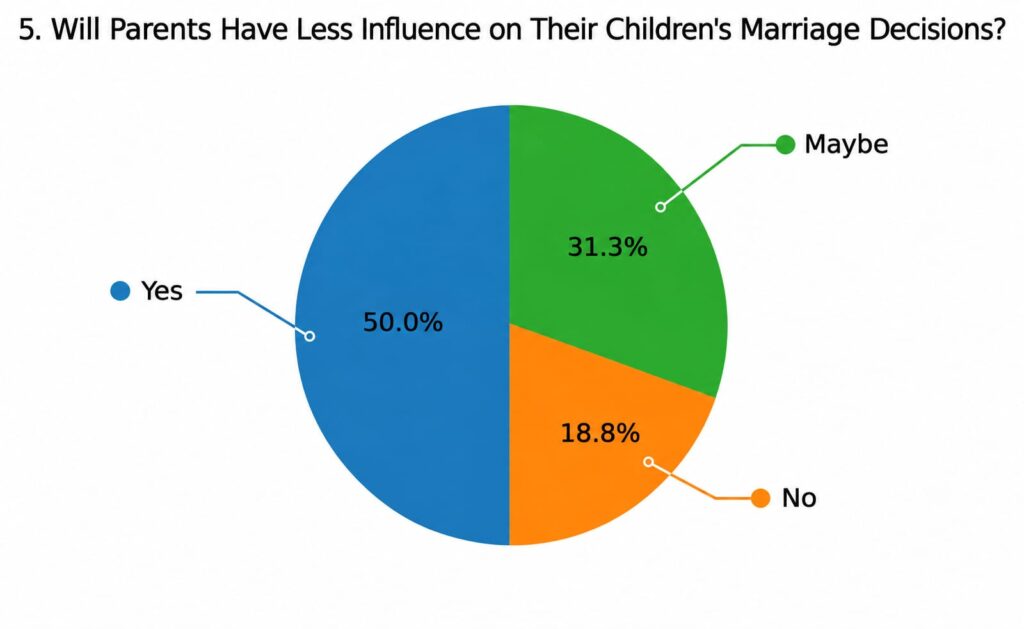
Half of the respondents (50%) believe parental influence may decrease by 2035. This could reflect greater independence among young adults. Parents may increasingly act as advisers and supporters rather than making decisions on behalf of their children. However, 31.3% selected “Maybe,” showing that family involvement may continue to remain important.
6. What Could Be the Biggest Reason for Rising Divorce Rates by 2035?
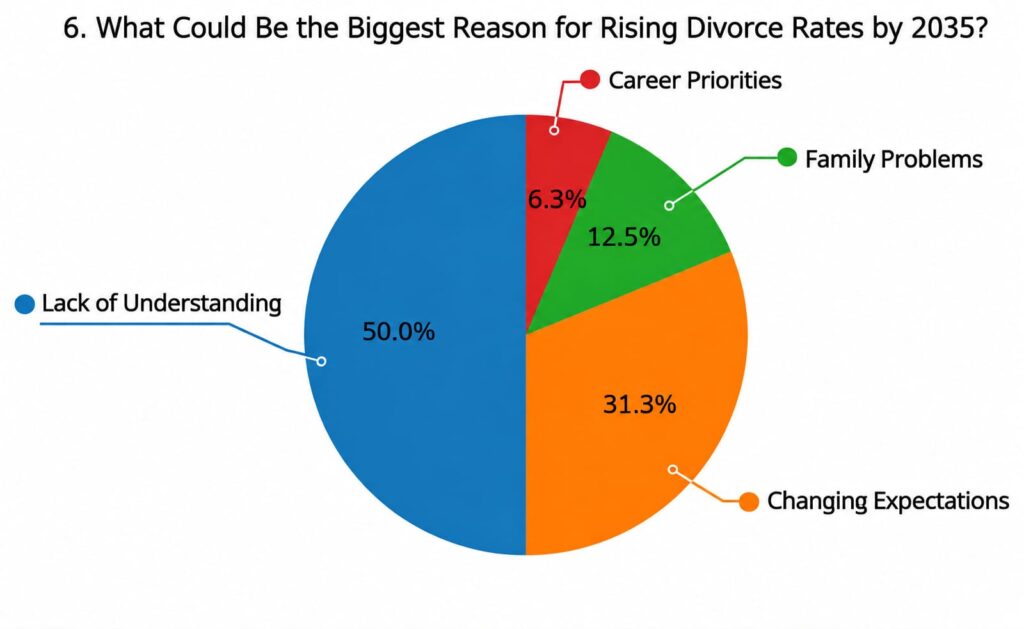
The largest response was “Lack of Understanding” at 50%. The second-largest was “Changing Expectations” at 31.3%. This suggests that respondents consider communication and mutual understanding important factors in relationships. Changing expectations regarding careers, finances, responsibilities and personal freedom may also affect relationships. These results represent the opinions of the 16 participants and should not be considered a definite prediction of future divorce rates.
Overall Findings
- 3% expect joint families to become less common.
- 75% expect young people to prefer independent living.
- 3% believe more couples may choose to remain child-free.
- 50% believe marriage may focus more on personal happiness and companionship.
- 50% believe parental influence on marriage decisions may decrease.
- 50% identify lack of understanding as the biggest possible reason for rising divorce rates.
Overall, the responses suggest a possible movement towards greater independence and flexibility, while traditional family relationships may continue in a changed form
Conclusion
The survey provides an interesting view of how people imagine the Indian family in 2035. The findings suggest that family structures may become smaller and more flexible, while individual choice may become increasingly important. However, this does not necessarily mean that traditional values will disappear. Parents, family relationships and emotional connections may continue to remain important even when family members live separately. The Indian family of 2035 may therefore represent a balance between tradition and modernity, where people maintain family bonds while also having greater freedom to make personal decisions.

Written By: Aashka Ashok Yadav
Research & Survey Inter at SRRO
“SRRO works as an implementation partner for CSR and social impact projects”