A study of state response, political expression and democratic rights.
Abstract
This survey examined students’ perceptions of freedom of expression, how state responses to political participation, and democratic rights of students using Google Form questionnaire which collected responses. Results indicate many respondents think there is a partial freedom of expression for students in India and they believe that to preserve the political authority of government these restrictions are accomplished. They also think that these type of harsh responses for protests by the state is a threat to democracy. The findings highlight the need for institutions that can encourage safe public or civic participation while balancing public order of the country.
Introduction
Freedom of expression is a fundamental human right that allows individuals to share ideas, seek information and speak freely. It covers spoken words, writing, art, media, and peaceful protests. This right is protected under the Article 19 (1) (a) of the Indian Constitution. Universities provide an important space for to understand, dialogue, debate and civic engagement for young students.
Literature Review
The existing literature reviews consider Freedom of Expression as the most important right in a democratic society which allows people to express their opinions, share ideas and participate in discussions without any fear or restrictions. There should be a balance, a careful navigation between the unrestricted flow of opinions and the dangers of digital misinformation was suggested by the study in India namely, “The Changing Face of Free Speech: A study of Article 19 in the Digital Age in India”(2023). A study by the assistant professors of LPU, “Restricting Freedom of Speech: An Overarching Threat?”(2022) says that every student and kids must learn to use their freedom of expression so that they can later use it in the civic democracy.
Research Gap
The existing literatures primarily focuses on the freedom of expression among religions, castes, media and the increasing digital involvement of youth in order to express their views which somehow leads to the spread of rumors and misinformation during the protests, whereas comparatively less attention was given to the students problems, improper exam conduction and the how state responses to the student protests. However, researches are done to understand the anxiety and pressures on students but these are limited to fill the gap between what and how Indian students are demanding and how the state responses.
Therefore, the present survey examines what students perceive, want and their civic engagement after the harsh actions by the institutions.
Objectives
- Assess perceptions of freedom of expression
- Understand views on state response to protests
- Examine impact on democratic rights of students.
Methodology
Descriptive survey using Google Forms.
Sample: student respondent mostly lie between the age group of 19-24. Responses include both male and female participant.
Data analyzed using descriptive statistics.
Key Findings
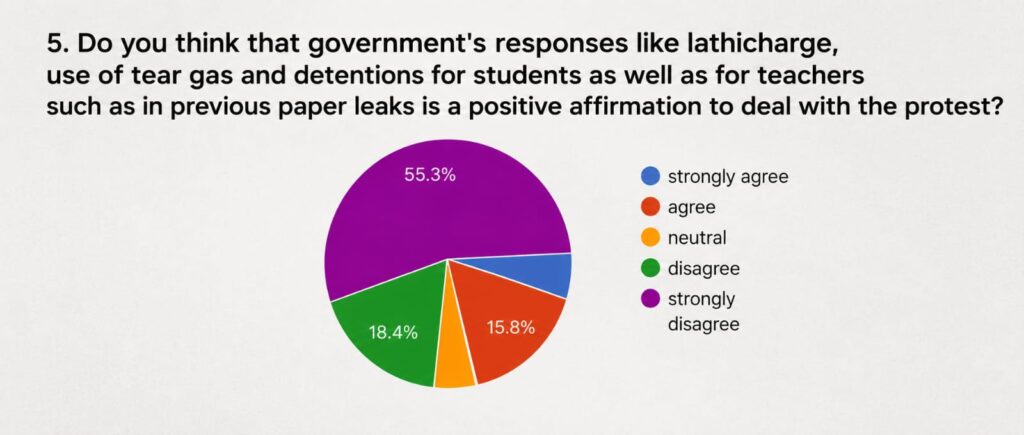
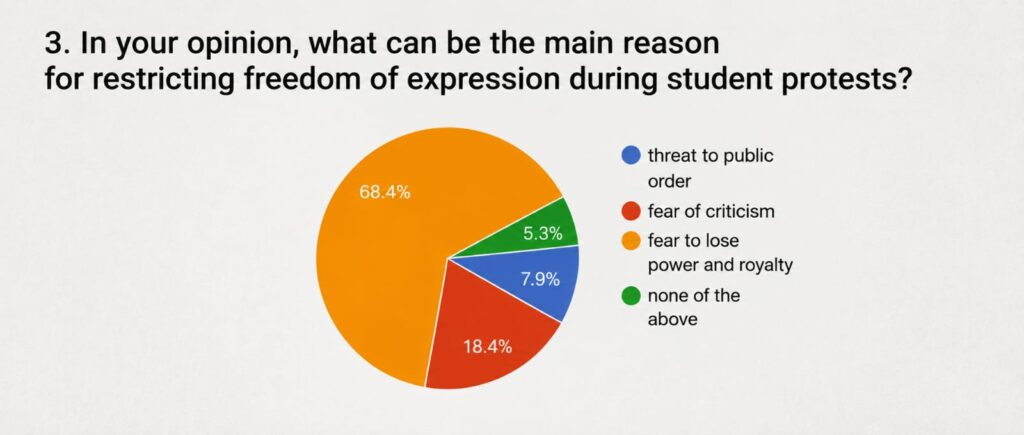
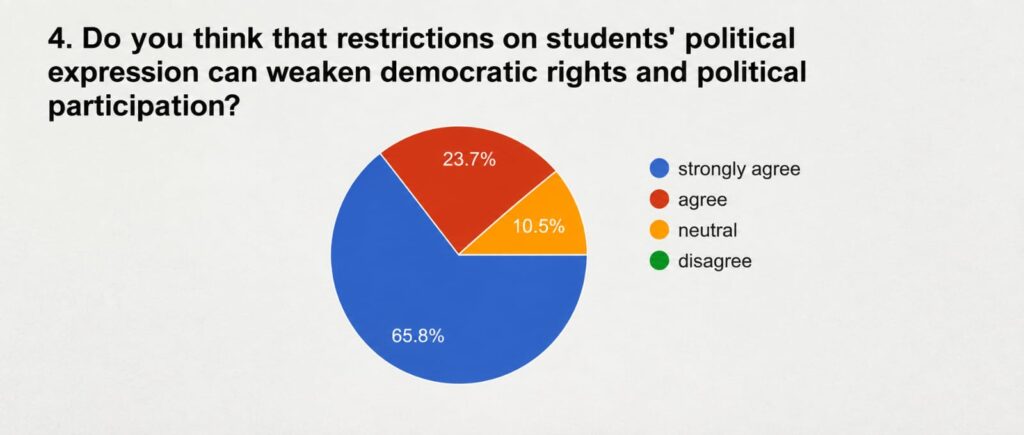
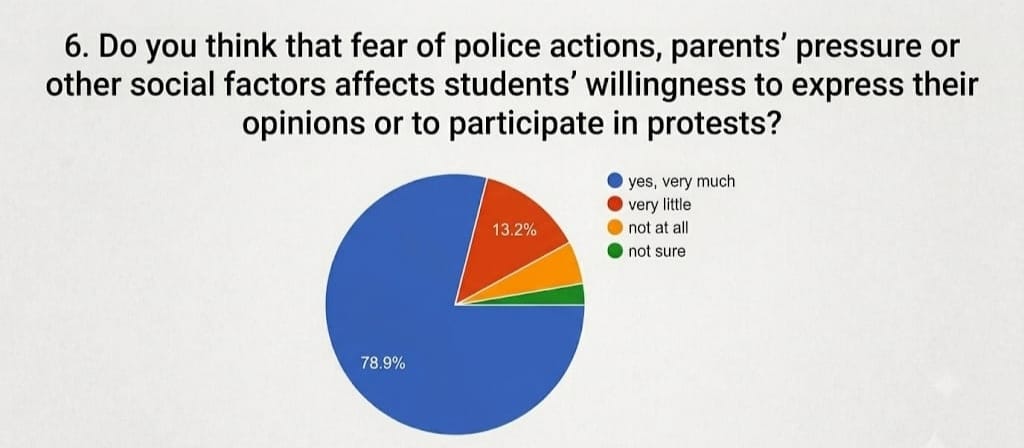
The results of this survey suggests that most(39.5%) of the Indian students feel that they are partially free to express their political opinions as because of their criticisms the Indian government have taken several steps at the central level to tackle the problems. About more than half (55.3%) of the students think that brutal actions are not to be taken for students’ peaceful protests and they should be treated differently from other political protests because it’s concerned about the future of our country. (68.4%) students believe that because of the fear to lose power and authority government is restricting their voice whereas they (65.8%) perceive that this can weaken the democratic rights and public participation. And hence police inclusions, more social factors scare the (78.9%) students to raise their voice against corruptions.
Suggested Charts
Discussion
The findings align with democratic theory that meaningful participation depends on the ability to express dissent. The responses indicate that most participants perceive limitations on students’ political expression and believe restrictive state actions may discourage democratic engagement. Participants also highlighted the concern of how societal pressures limits the participations.
Conclusion
The survey indicates that respondents value freedom of expression as a democratic right and expect political authorities to safeguard peaceful political participation. Accountable and transparent governance and rights awareness may strengthen democratic participation among students.
Recommendations
- Promote constitutional literacy.
• Encourage student participation with maintaining public order
• Ensure peaceful responses to student protests.
• Strengthen problem redressal mechanisms.
Written By – Pratishtha Gupta
SRRO Intern
“SRRO works as an implementation partner for CSR and social impact projects”