
INTRODUCTION
Artificial Intelligence (AI) has become one of the most significant technological advancements of the 21st century. It is transforming industries by enabling machines to perform tasks that previously required human intelligence, such as problem-solving, decision-making, language processing, and data analysis. AI is now widely used in sectors including healthcare, education, banking, manufacturing, agriculture, retail, transportation, and information technology.
While AI has improved productivity, efficiency, and innovation, it has also raised concerns regarding its impact on employment. Many routine and repetitive jobs are becoming automated, leading to fears of job displacement. At the same time, AI is creating new career opportunities that require advanced technical knowledge, digital literacy, creativity, and analytical skills. As a result, continuous learning, upskilling, and reskilling have become increasingly important for individuals to remain competitive in the evolving job market.
Understanding public perception of AI is essential for developing effective policies, educational strategies, and workforce development programs. This study aims to examine people’s opinions regarding the impact of Artificial Intelligence on employment and skill development through a survey-based approach.
LITERATURE REVIEW
Existing studies suggest that Artificial Intelligence is transforming the nature of work rather than simply replacing human workers. Research highlights that AI has the potential to improve productivity, support innovation, and create new employment opportunities while simultaneously reducing demand for certain routine occupations.
Several reports emphasize that future employment will increasingly depend on digital skills, critical thinking, problem-solving ability, communication skills, and adaptability. Experts argue that governments, educational institutions, and industries should work together to prepare individuals for the changing labour market through continuous learning and skill development.
Previous research also indicates that although awareness of AI is increasing, public opinions remain divided regarding its long-term impact on employment. While some view AI as an opportunity for economic growth and innovation, others are concerned about job security, income inequality, and workforce displacement.
ANALYSIS
To understand public perceptions regarding the impact of Artificial Intelligence (AI) on employment and skill development, a survey of 33 respondents was conducted. The findings provide valuable insights into respondents’ awareness of AI, their expectations regarding future employment, and their preparedness to adapt to an AI-driven job market.
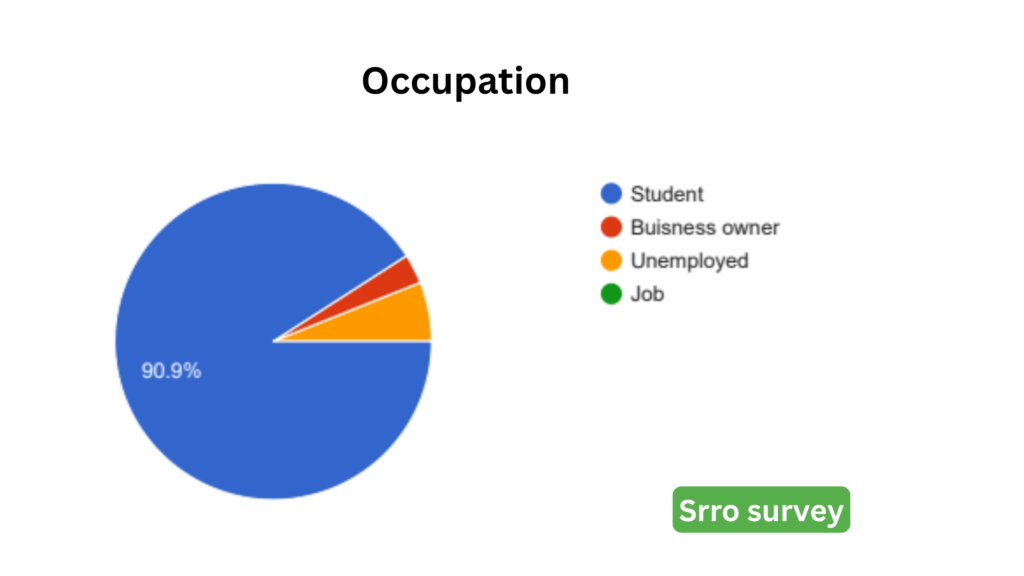
The demographic profile of the respondents indicates that the survey was largely student-oriented. Approximately 90.9% of the participants were students, while 6.1% were unemployed and only a small proportion represented business owners. This suggests that the opinions gathered mainly reflect the perspectives of young individuals who are likely to enter the workforce in the near future and will be directly influenced by AI-driven technological changes.
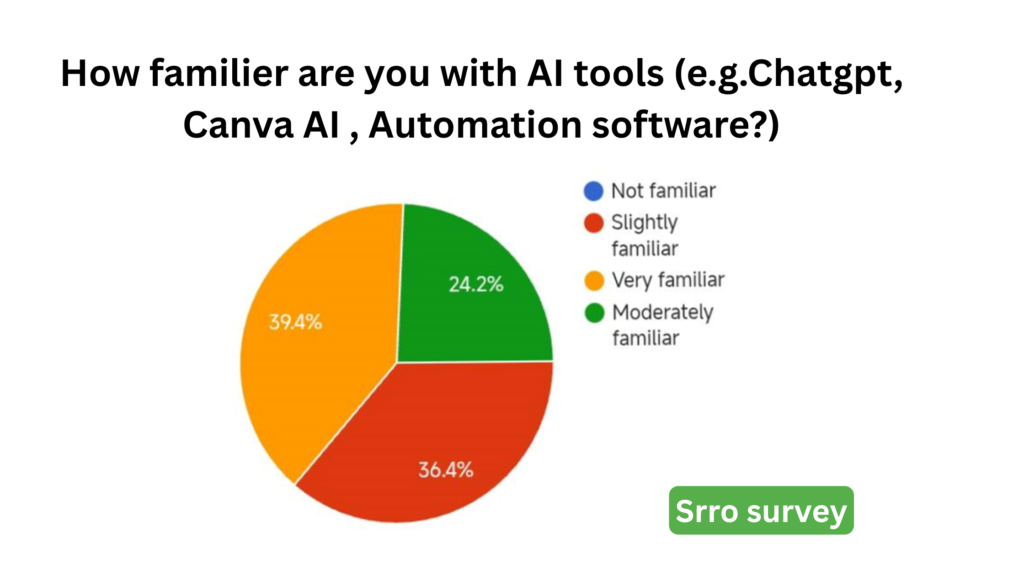
The survey also examined respondents’ familiarity with AI tools such as ChatGPT, Canva AI, and automation software. The findings reveal a relatively high level of awareness. About 39.4% of respondents reported being very familiar with AI tools, while 24.2% considered themselves moderately familiar. However, 36.4% indicated that they were only slightly familiar, suggesting that although AI has become increasingly popular, many individuals still require greater exposure and practical experience. None of the respondents reported being completely unfamiliar with AI, reflecting the widespread reach of AI technologies among the surveyed population.
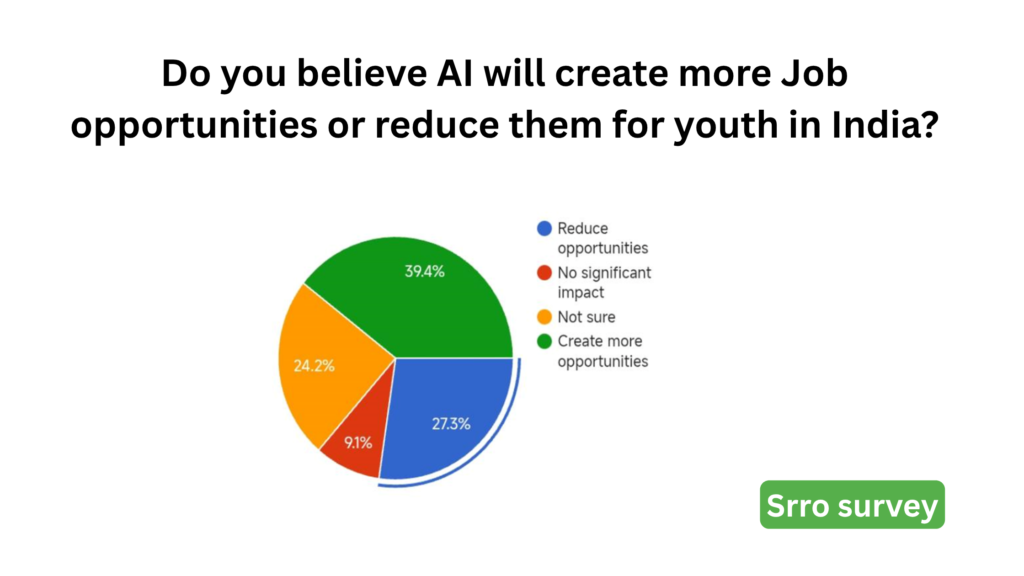
When asked about AI’s impact on employment opportunities for youth in India, opinions were diverse. The largest proportion of respondents (39.4%) believed that AI would create more job opportunities, indicating optimism regarding technological advancement. Meanwhile, 27.3% believed that AI would reduce employment opportunities due to automation, 24.2% were uncertain, and 9.1% felt AI would have no significant impact. These findings suggest that although respondents recognize the risks associated with automation, many believe AI will generate new forms of employment
requiring different skills.
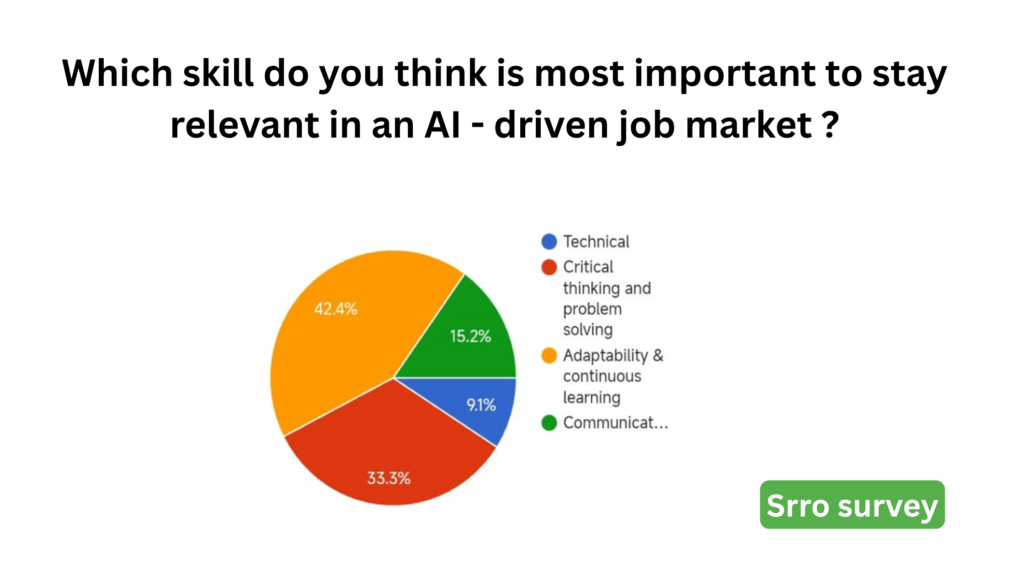
The survey further explored which skills respondents considered most important in an AI-driven job market. The largest group (42.4%) identified adaptability and continuous learning as the most essential skill for future success. Another 33.3% selected critical thinking and problem-solving, while 15.2% emphasized communication and interpersonal skills. Only 9.1% considered technical skills alone to be the most important. These responses indicate that respondents view lifelong learning and cognitive abilities as more valuable than technical expertise alone in adapting to technological change.
Finally, respondents were asked whether they had taken any steps to prepare themselves for AI-related changes in the job market. Around 30.3% reported that they were actively upskilling, while 27.3% planned to begin learning soon. The largest group (36.4%) acknowledged that they had not yet started but expressed interest in doing so. Only 6.1% reported having no interest in AI-related upskilling. These findings indicate a positive attitude toward skill development, although a considerable proportion of respondents have yet to convert their interest into practical action.
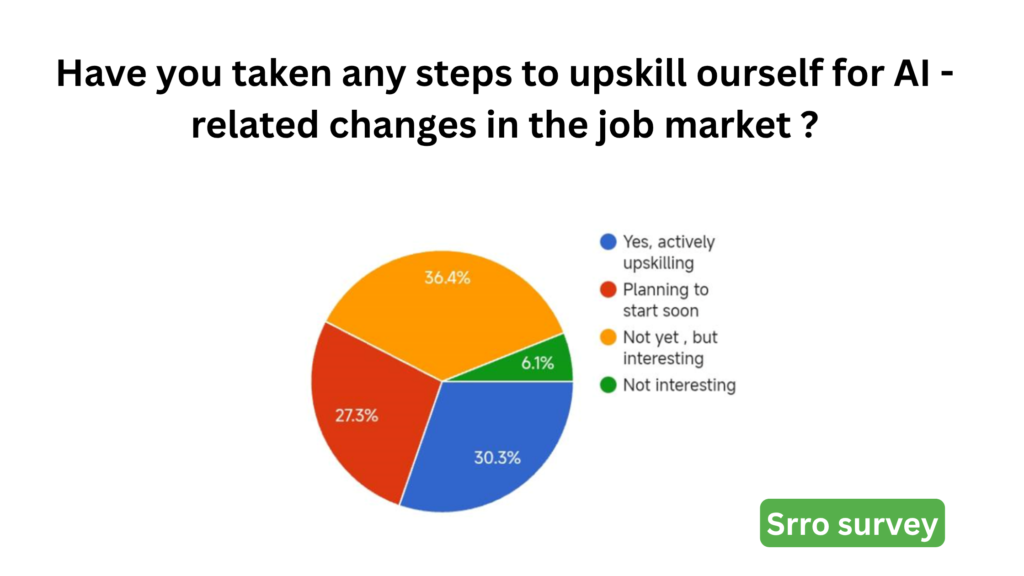
Overall, the survey findings suggest that respondents possess a generally positive outlook towards Artificial Intelligence. While concerns regarding job displacement remain, most participants believe that AI will create new employment opportunities and recognise the importance of continuous learning, adaptability, and skill development. The results also highlight the need for educational institutions, industries, and policymakers to provide accessible training programmes that enable individuals to successfully adapt to the evolving AI-driven labour market.
CONCLUSION
The present study examined public perceptions regarding the impact of Artificial Intelligence on employment and skill development through a survey of 33 respondents. The findings indicate that although respondents acknowledge the possibility of AI replacing certain routine jobs, most believe that AI will also create new employment opportunities requiring advanced knowledge and modern skills.
The survey revealed that respondents possess a good level of awareness about AI tools, reflecting the growing influence of Artificial Intelligence in education and professional environments. At the same time, the results highlight that adaptability, continuous learning, and critical thinking are considered more important than technical skills alone for success in the future job market.
Another significant finding is that while many respondents have already started upskilling or plan to do so, a considerable proportion are interested but have not yet taken practical steps. This suggests that there is a need for greater access to affordable training programmes, career guidance, and AI-related educational opportunities.
Overall, the study concludes that Artificial Intelligence should not be viewed solely as a threat to employment but also as an opportunity for innovation, productivity, and career growth. Preparing the workforce through continuous learning, skill development, and collaboration among educational institutions, industries, and government will be essential to ensure that individuals can successfully adapt to the changing demands of an AI-driven economy.
REFERENCES
- Survey Source
Google Form Survey conducted by the researcher: Impact of AI on Employment and Skill Development.
Literature Sources
- World Economic Forum. The Future of Jobs Report.
- International Labour Organization (ILO). Artificial Intelligence and the Future of Work.
- Organisation for Economic Co-operation and Development (OECD). Artificial Intelligence, Skills and Employment.