INTRODUCTION-
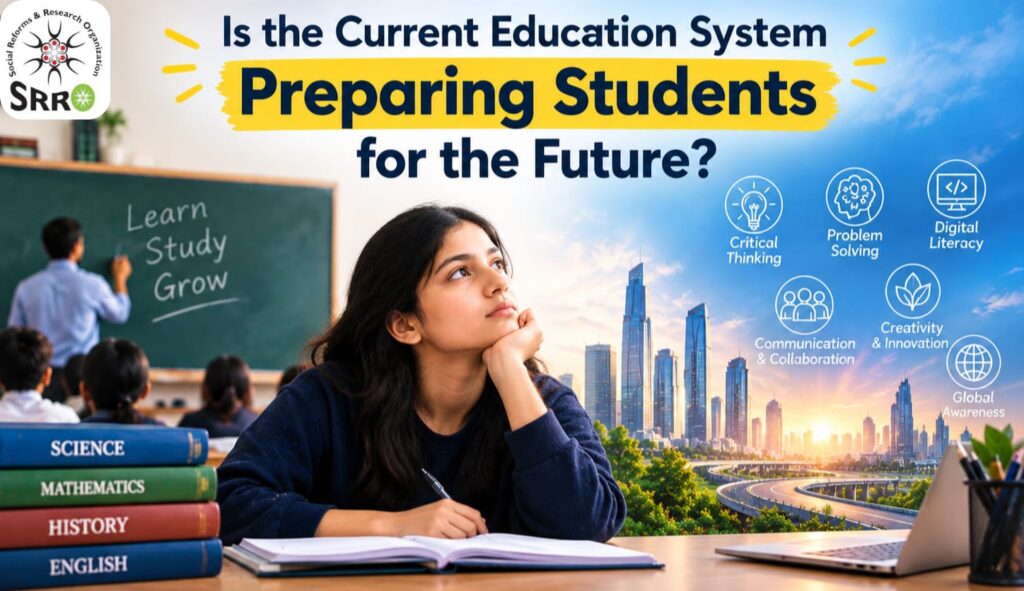
Education is one of the most significant pillars of a nation’s social and economic development. In the twenty-first century, rapid technological advancements, artificial intelligence, automation, and changing employment patterns have transformed the skills required to succeed. Consequently, the effectiveness of the current education system has become an important subject of public discussion.
This survey was conducted by the Social Reforms & Research Organization (SRRO) to understand public opinion on whether the present education system adequately prepares students for future academic, professional, and real-life challenges. The survey aimed to gather views from individuals of different age groups regarding practical learning, employability, skill development, curriculum relevance, and overall educational effectiveness.
The findings presented in this report are based on responses collected through an online Google Form. The report analyses participants’ opinions, identifies common concerns, and highlights suggestions that may contribute to improving educational policies and practices.
Objectives of the Study-
-To understand public perception of the current education system.
-To identify the strengths and weaknesses of existing educational practices.
-To examine whether students are acquiring skills needed for future employment.
-To collect suggestions for improving education and making it more future-oriented.
-To provide evidence-based recommendations derived from public opinion.
Respondent Profile-
Respondents belonged to different age groups and genders, ensuring that the survey captured diverse opinions regarding the current education system. Although the survey primarily targeted students and young adults, it also received responses from individuals outside the student community, providing a broader perspective on the topic.
The demographic information collected helps in understanding whether opinions vary across different sections of society and also enhances the reliability of the survey findings.
Age Distribution of Respondents
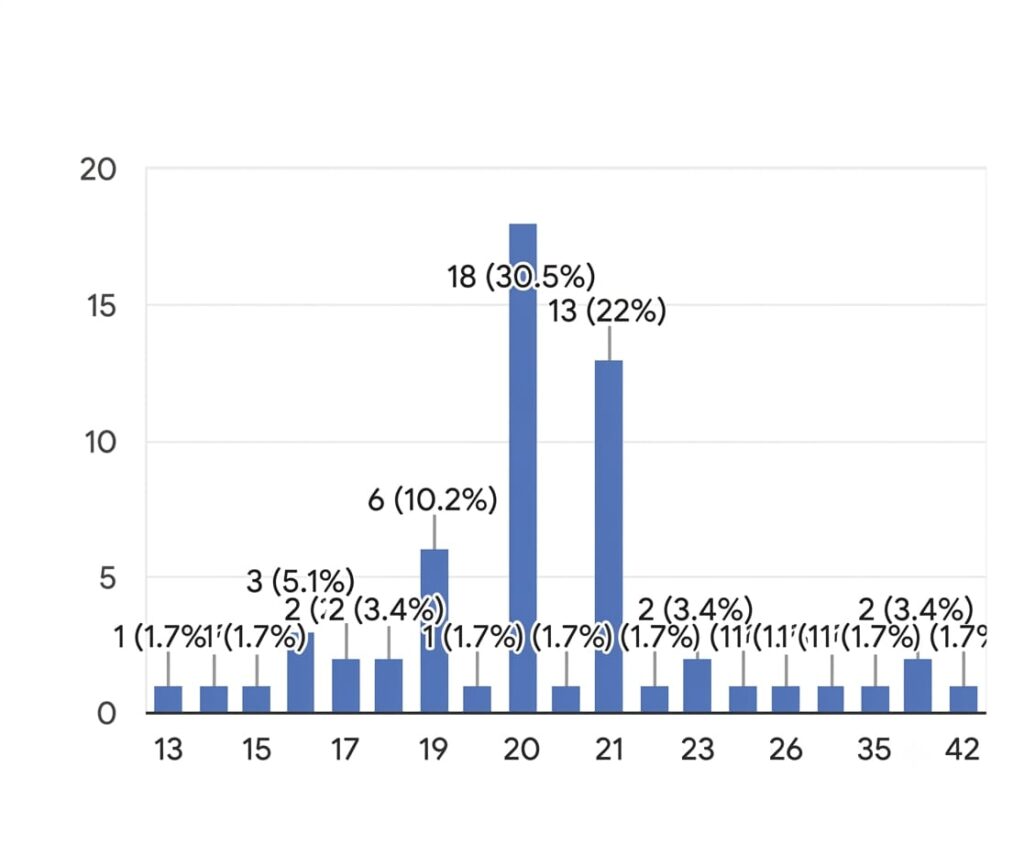
The survey received responses from participants belonging to different age groups, with the majority falling within the 19–22 years category. This age group mainly consists of undergraduate and postgraduate students who are directly experiencing the strengths and limitations of the current education system. Their opinions are particularly valuable because they are either preparing for higher education or entering the job market
A comparatively smaller number of responses were received from older age groups. Nevertheless, their participation provides additional insight into how education is perceived beyond student life. The presence of respondents from multiple age categories increases the credibility of the survey and reflects a wider public perspective on educational reforms.
Gender Distribution of Respondents
The survey includes responses from both male and female participants, allowing the findings to represent a balanced range of perspectives. While the distribution may vary slightly, the participation of both genders suggests that concerns related to the education system are shared across society rather than being limited to one particular group. The relatively balanced demographic profile strengthens the survey by ensuring that the opinions presented are not influenced by a single demographic category. This diversity makes the findings more useful for understanding public expectations from the education system.
Questions Analysis-
Do you think the current education system prepares students for real-life challenges?
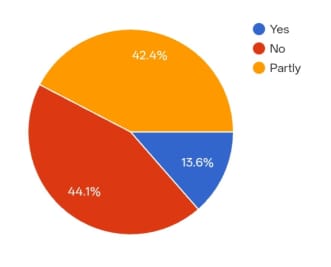
This question was designed to understand respondents’ overall perception of whether the current education system equips students with the knowledge, confidence, and practical abilities required to face real-life situations
The survey findings reveal that the majority of respondents selected “Partly”, indicating that while the education system succeeds in providing academic knowledge, it falls short in preparing students for practical life and professional challenges. This response reflects a nuanced opinion rather than outright dissatisfaction. Respondents appear to acknowledge the value of formal education but believe that it requires significant improvements to meet the demands of today’s rapidly changing world.
Only a smaller proportion of respondents believed that the education system fully prepares students for real-life situations. This suggests that complete confidence in the present system is relatively limited. Conversely, respondents who selected “No” expressed concerns that the existing curriculum places excessive emphasis on examinations and theoretical learning while giving insufficient attention to practical problem-solving, communication skills, financial literacy, career readiness, and adaptability.
The findings indicate a broader public expectation that education should extend beyond textbooks and examinations. Modern employers increasingly seek individuals who possess critical thinking, creativity, teamwork, digital competence, and decision-making skills. The responses suggest that many participants feel these competencies are not being developed adequately through the current educational framework.
Overall, the responses demonstrate that while the existing education system provides a foundation of academic knowledge, there is a strong public demand for reforms that integrate practical learning, experiential education, internships, project-based activities, and life skills into mainstream education. Such reforms could bridge the gap between classroom learning and the realities of higher education,
employment, and everyday life.
Overall, do you believe the current education system is preparing students for the
future?
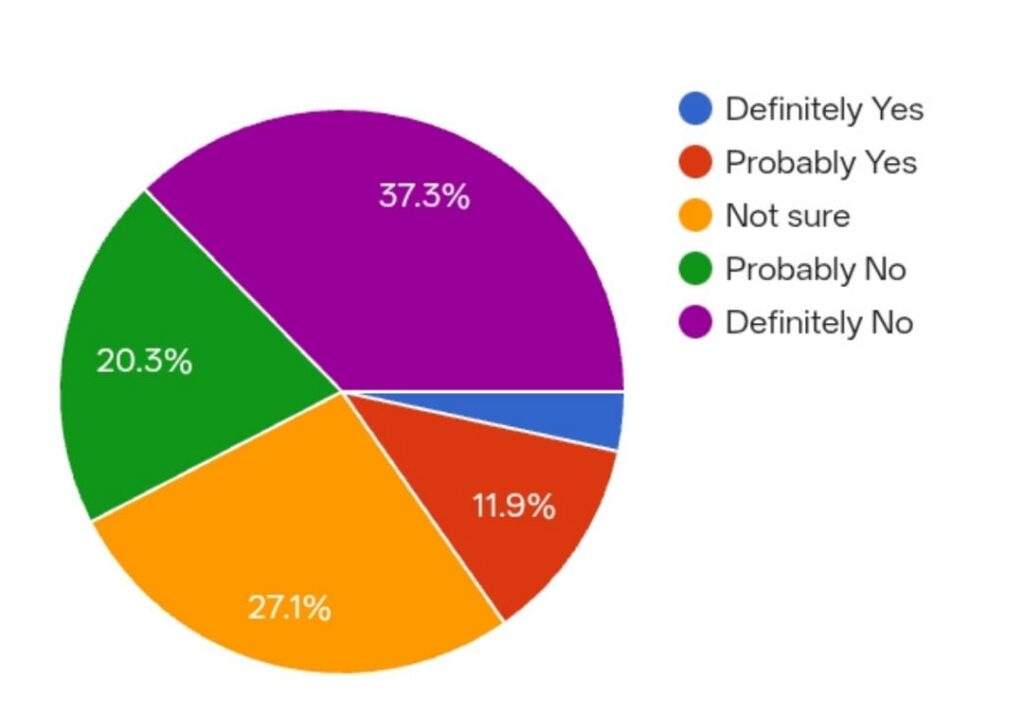
This question sought to measure respondents’ overall confidence in the ability of the current education system to prepare students for future academic, professional, and social challenges.
The survey findings demonstrate that opinions are mixed; however, the majority of respondents expressed either cautious optimism or concern rather than complete confidence. This indicates that while participants recognise certain strengths within the existing education system, they also believe considerable improvements are necessary before it can effectively prepare students for an increasingly
competitive and technology-driven future.
Respondents selecting “Probably Yes” appear to acknowledge that schools and colleges provide a valuable educational foundation but believe the system requires greater emphasis on innovation, practical application, and skill development. On the other hand, participants choosing “Probably No” or “Definitely No” express dissatisfaction with the current model, suggesting that the education system has
not adapted sufficiently to modern societal and labour market expectations.
The presence of respondents who selected “Not Sure” is equally noteworthy. This may indicate uncertainty regarding how educational outcomes should be measured or reflect varying experiences across different institutions and educational boards.
Key Findings-
The survey produced several significant findings:
-Most respondents believe the current education system prepares students only partially for real-life
challenges.
-Practical and job-oriented skills emerged as one of the strongest expectations from schools and
colleges.
-Lack of practical learning and an examination-centred approach were identified as major
weaknesses.
-Public confidence in the education system exists but is accompanied by a strong demand for
reforms.
-Open-ended responses consistently called for curriculum modernisation, practical exposure, career
guidance, and reduced dependence on rote learning
Conclusion-
The survey indicates that while respondents appreciate the role of education in shaping knowledge and personal growth, they also believe that the existing system requires meaningful reforms to address future challenges. Participants consistently highlighted the need for practical learning, updated curricula, career-oriented education, and skill development. Rather than rejecting the current system entirely,
respondents advocated for its transformation into a more flexible, inclusive, and future-ready model.
The findings of this study suggest that educational reforms should focus on creating an environment where students not only acquire academic knowledge but also develop the competencies required to thrive in higher education, employment, and society. By aligning education with contemporary needs while preserving its foundational values, policymakers and educational institutions can ensure that the system remains relevant and effective for future generations.

Written By – Yashika Saini
“SRRO works as an implementation partner for CSR and social impact projects”