Introduction-
Corporate Social Responsibility (CSR) in India has undergone a radical transformation. What once began as a voluntary act of philanthropy has evolved into a mandatory legislative framework under Section 135 of the Companies Act, 2013. For an institution like the Social Reforms and Research Organisation (SRRO), understanding this landscape is vital. While the mandate has unlocked billions in capital for social development, the transition from “compliance on paper” to “impact on the ground” remains fraught with hurdles.
In this deep dive, we explore the primary challenges facing CSR implementation in India and provide a strategic roadmap to overcome them.
1. The Challenge of “Check-the-Box” Compliance
The most significant hurdle is the mindset. Many corporations view CSR as a legal burden or a tax rather than an opportunity for social innovation. This leads to a “compliance-first” approach where the goal is simply to exhaust the budget by March 31st, often resulting in poorly planned projects.
How to Overcome It:
Strategic Integration: Companies must align CSR with their core business values. When CSR is integrated into the corporate DNA, it ceases to be a chore and becomes a mission.
Long-term Commitment: Instead of one-off donations, firms should adopt multi-year programs that allow for measurable social gestation periods.
2. Lack of Transparency and Professionalism at the Grassroots
While India has thousands of NGOs, a significant number lack the institutional capacity to handle large-scale corporate funds. Issues regarding financial transparency, lack of audited accounts, and poor reporting standards often deter corporates from forming long-term partnerships.
How to Overcome It:
Rigorous Due Diligence: Corporates must invest in robust vetting processes. Organizations like SRRO play a crucial role here by providing research-backed data and verified implementation partners.
Capacity Building: Corporates should allocate a portion of their budget to train NGO partners in financial management, data collection, and impact reporting
3. The “Geographic Concentration” Bias
There is a glaring disparity in fund distribution. Industrialized states like Maharashtra, Gujarat, and Karnataka receive a lion’s share of CSR funds, while the North-Eastern states and aspirational districts in Bihar or Odisha remain underserved. This “proximity bias” happens because companies prefer monitoring projects close to their manufacturing hubs.
How to Overcome It:
Pan-India Portfolios: The Government and consultants should encourage companies to look beyond their “backyard.”
Collaborative Models: Small and medium enterprises (SMEs) can pool their resources into a common fund to target remote regions where the need for social reform is highest.
4. Measurement and Impact Assessment Gaps
Measuring “smiles” is harder than measuring “sales.” Many organizations struggle to quantify the long-term impact of their interventions. If a company builds a school, the success isn’t the building (output); it’s the improvement in literacy rates and employability over ten years (outcome).
How to Overcome It:
The Theory of Change (ToC): Implementing a ToC framework helps organizations map out exactly how their inputs lead to long-term impact.
Third-Party Audits: Engaging independent research bodies to conduct Social Return on Investment (SROI) studies ensures unbiased reporting.
5. Community Participation and Ownership
A common pitfall is the “top-down” approach—designing projects in a boardroom without consulting the actual beneficiaries. When a community doesn’t feel a sense of ownership over a project (e.g., a community water plant), the infrastructure often falls into disrepair once the corporate moves on.
How to Overcome It:
Participatory Rural Appraisal (PRA): Before launching a project, teams should conduct ground-level surveys to understand local needs.
Community Committees: Form local groups to manage and maintain projects, ensuring sustainability long after the CSR funding cycle ends.
6. Navigating Regulatory Complexity
The CSR rules in India are dynamic. Frequent amendments regarding the treatment of unspent funds, the definition of “administrative overheads,” and mandatory impact assessment thresholds can be confusing for even the most seasoned CSR heads.
How to Overcome It:
Legal & Policy Advisory: Dedicated CSR cells within companies or partnerships with research organizations like SRRO can provide the necessary legal clarity and ensure 100% compliance with the Ministry of Corporate Affairs (MCA) guidelines.
The Path Forward: From Charity to Change
The evolution of CSR in India is moving toward ESG (Environmental, Social, and Governance) integration. To truly overcome implementation challenges, we must move away from viewing CSR as “giving back” and start viewing it as “investing forward.”
Social Reforms and Research Organisation (SRRO) believes that the bridge between corporate capital and social change is built on the pillars of Data, Transparency, and Empathy. By addressing these six challenges with a structured, research-oriented approach, Indian corporations can transform from mere funders into true architects of social reform.
Key Takeaways for Stakeholders:
Prioritize Impact over Spend: Focus on the quality of the intervention, not just the quantity of the budget.
Invest in Partnerships: The NGO-Corporate relationship should be a partnership of equals.
Use Technology: Leverage blockchain or AI-based platforms for real-time monitoring of fund utilization.
Conclusion
India’s CSR mandate is a powerful tool for nation-building. While challenges like geographic bias and lack of transparency are real, they are not insurmountable. With the right mix of strategic planning, community engagement, and rigorous research, we can ensure that every rupee spent contributes to a more equitable and sustainable India.
At SRRO, we remain committed to bridging the gap between research and reform. Join us in making CSR more than just a mandate—make it a movement.
Written By – Shivangi Pandey
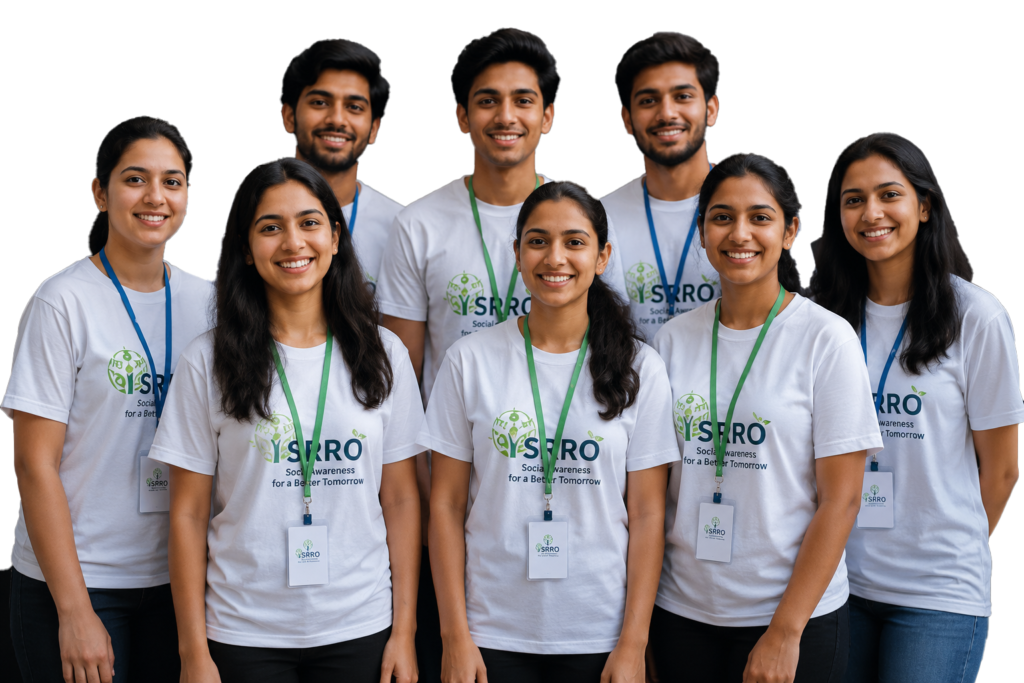
“SRRO works as an implementation partner for CSR and social impact projects”